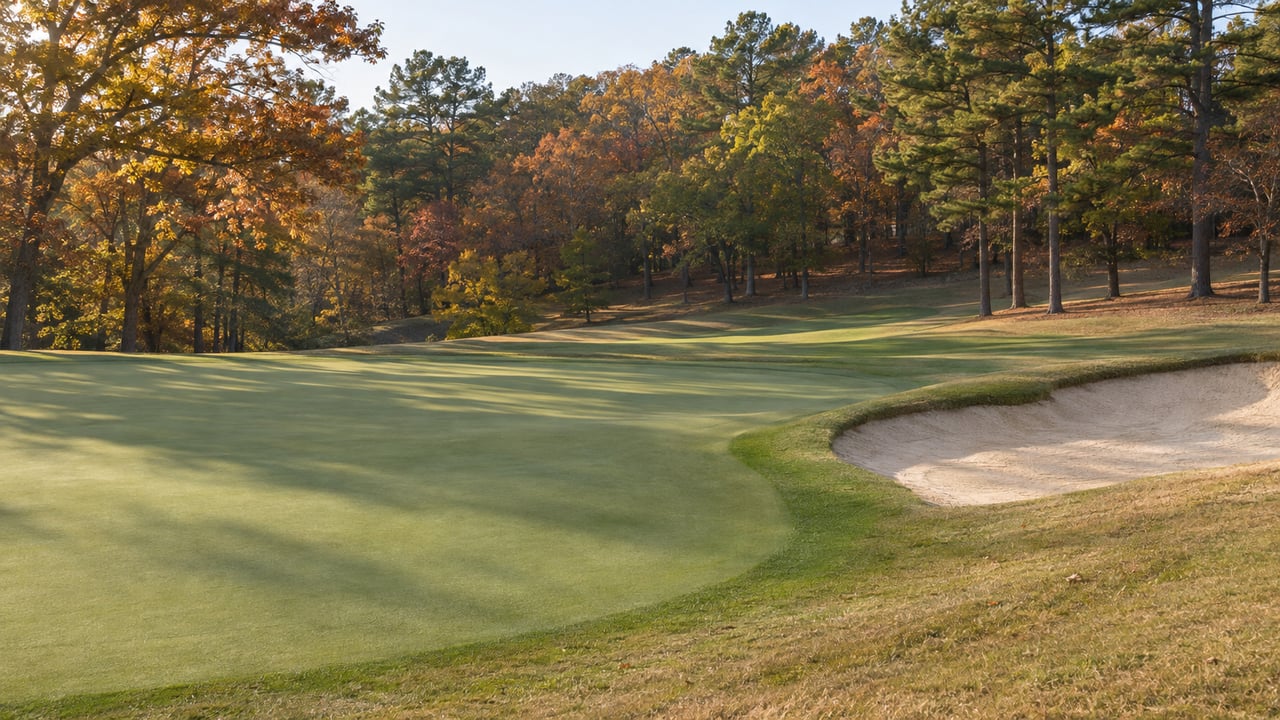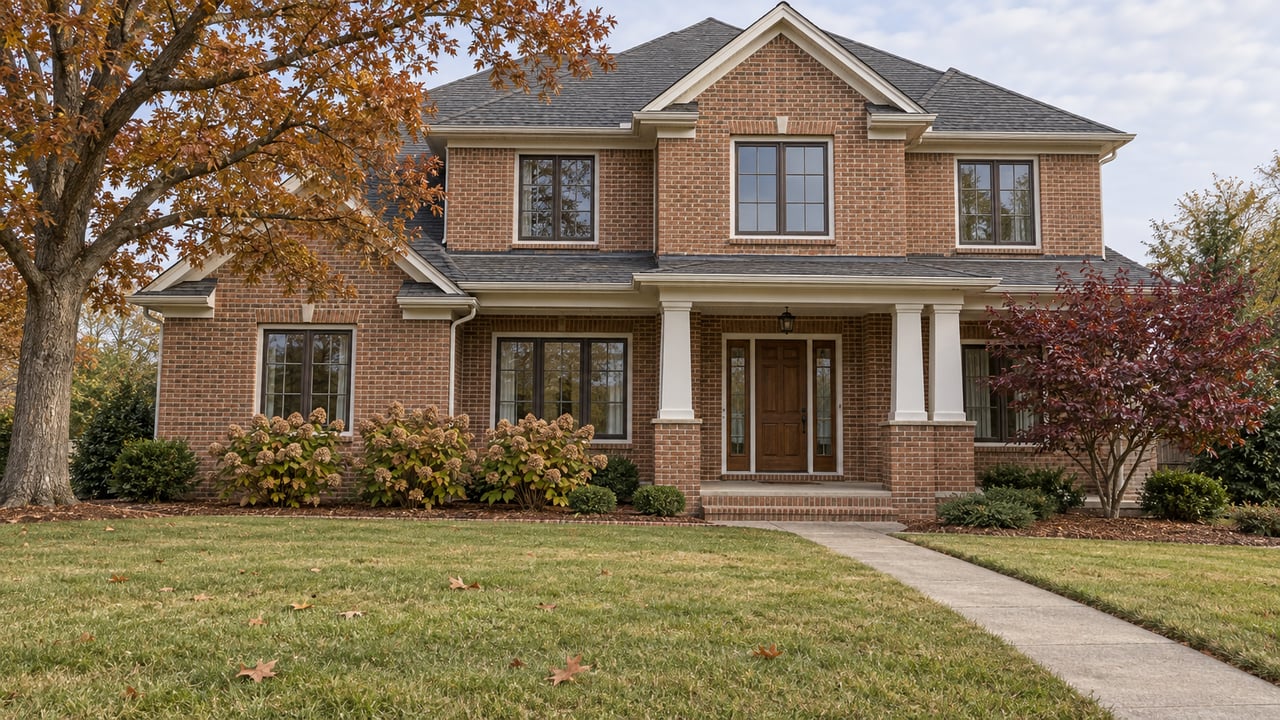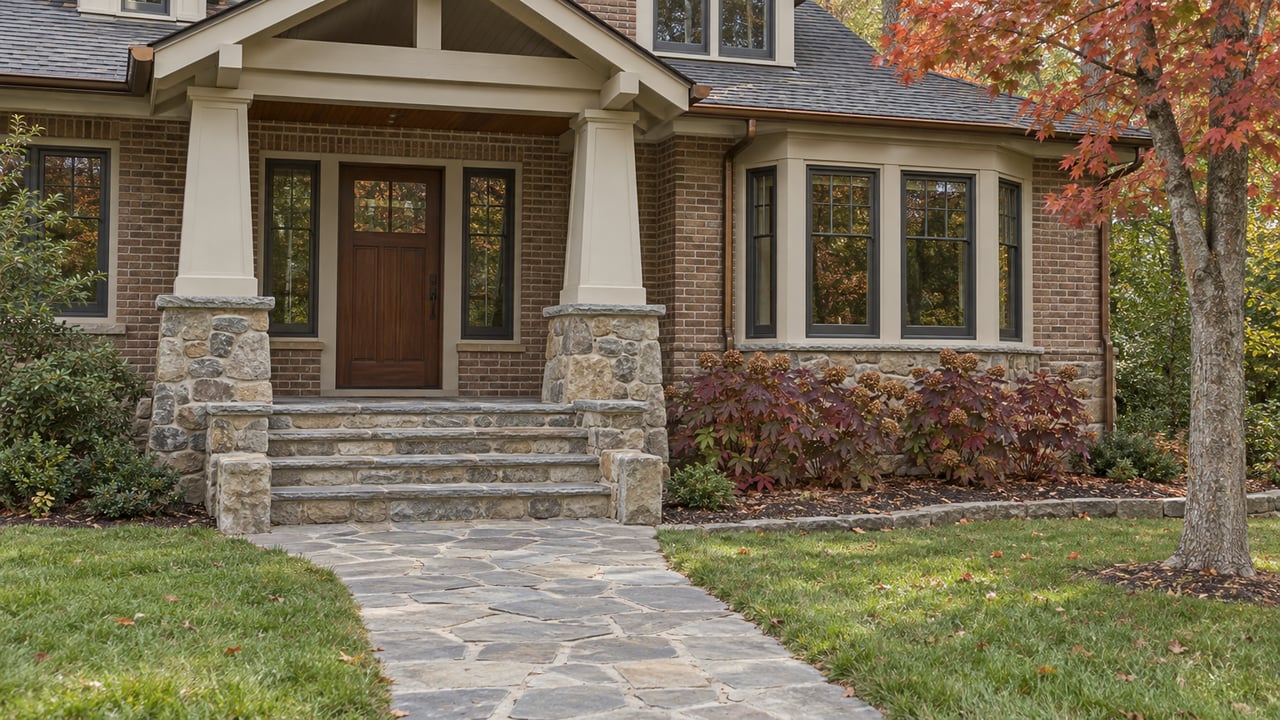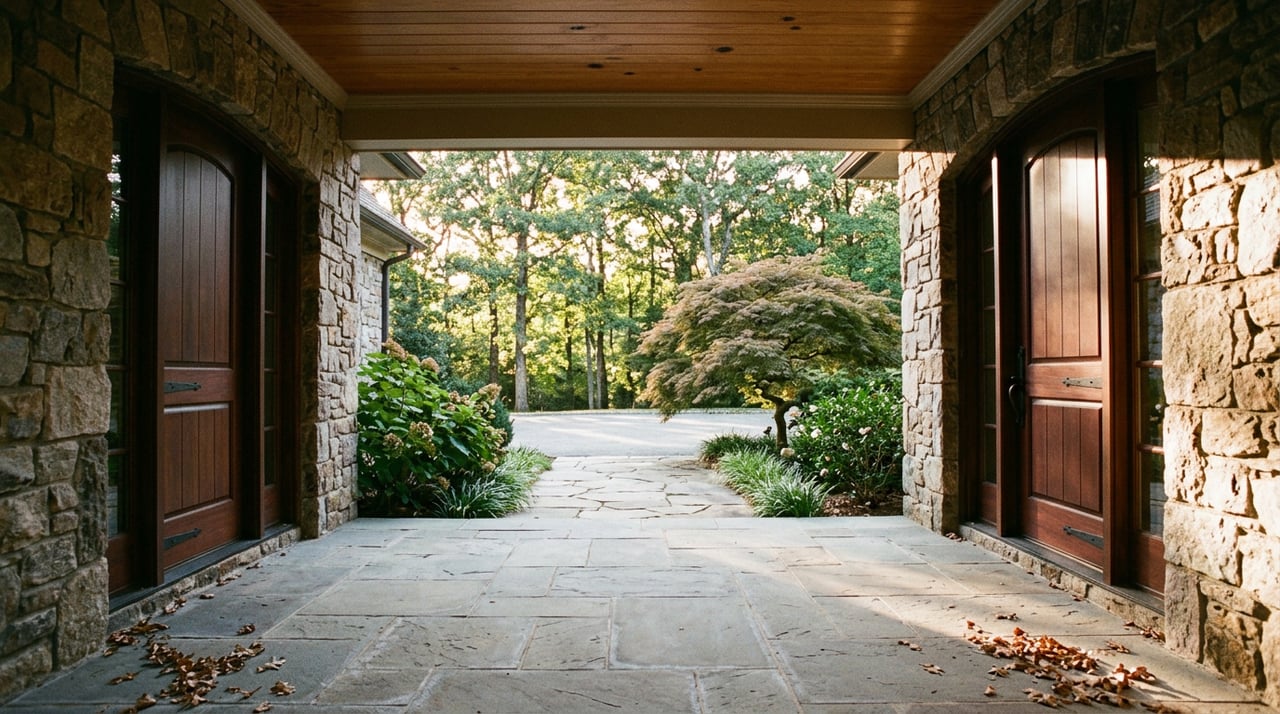
A buyer walked a lot at Achasta this summer, one of twenty-four new home sites released atop Bear Paw Ridge, the first fresh inventory the golf community had opened in roughly fifteen years. More than half the section was already spoken for. Six miles away, near the intersection of Highway 60 and GA 400, a parcel that was supposed to hold new townhomes for four years running sat listed for sale again, its development permits described as needing renewal.
Both of those properties are in Lumpkin County. Both would show up if you searched Dahlonega real estate. And neither one has much to do with the other, which is exactly the problem with quoting a single median price for this market and expecting it to mean something.
The Number Everyone Quotes
Pull up three sources and you get three different Dahlonega. Over the three months ending in May 2026, Lumpkin County's median sale price ran $411,000, up 6.0 percent from the same window a year earlier. A separate home value index for the county, updated at the end of June 2026, put the figure at $398,577, up a more modest 1.3 percent year over year. Zoom out to the whole state and Georgia REALTORS reported a year-to-date median of just $360,000 through June 2026, up 0.3 percent, with the average sale price running higher at $449,292.
None of these numbers are wrong. They're measuring different things: different time windows, different geographies, different math (median versus average, one home's Zestimate versus another's closed price). But there's a more basic problem hiding underneath the math. Even a perfectly calculated Lumpkin County median blends two housing markets that are moving for entirely different reasons, and if you're shopping in one while reading data about the other, the number tells you nothing useful about what you're actually competing against.
Days on market gives away the tension. Homes across the county averaged 51 days to sell in that same three-month window ending in May 2026, up from 36 days a year prior. That's a market cooling on average. But an average of two very different speeds isn't a speed. It's a blend of a segment that's moving fast because there's almost nothing to buy, and a segment that's moving slow because the supply everyone expected still isn't there.
The Market That's Actually Scarce
Start with the segment where scarcity is real. Achasta, the gated golf community built around a Jack Nicklaus course in the foothills west of downtown, released a new section this year called The Mountain Top at Bear Paw Ridge. It's a small collection, twenty-four home sites perched at the top of the ridge with long-range mountain views, and it marks the first new lot release inside the community in roughly fifteen years. That's not marketing language, it's a supply fact. When a builder or developer hasn't opened new ground in a community for a decade and a half, and then does, the buyers who've been waiting show up fast. More than half the section was reportedly under contract not long after release.
This is the part of Dahlonega's market pulling the median up. Buyers competing for a scarce, finite release of luxury lots behave the way buyers always do when supply is capped and demand isn't: they move quickly, they don't quibble much on price, and the transactions that close reflect genuine competition rather than a soft market absorbing whatever's available. If you're shopping this segment, the countywide days-on-market average telling you the market cooled by fifteen days is close to irrelevant. You're not in the average. You're in the tight end of it.
The Attached-Home Proposal's Timeline
Now look at the other end. Since 2022, a roughly fifty-acre parcel off Brandy Mountain Road near the GA 400 and Highway 60 interchange has been the subject of a county planning process that has unfolded over several years, and it illustrates exactly why entry-level and attached-home supply hasn't shown up the way the top of the market has.
The timeline runs like this:
- September 2022: Lumpkin County's Board of Commissioners approved a Character Area Map amendment for the parcel, with a condition that site development begin within twelve months or the land would revert to its more restrictive Residential Growth designation.
- August 2023: The board granted a six-month extension, pushing the construction deadline to February 2024.
- January 2024: The developer secured a Land Disturbance Approval, but no site work followed.
- August 2025: The Lumpkin County Planning Commission took up a new request. The developer had shifted the plan from an original mix of roughly 288 two- and three-story apartment units down to single-story townhomes, and the commission voted to recommend a new Character Area Map amendment to make that possible. At that same meeting, Lumpkin County Water and Sewerage Authority Executive Director Sean Phipps testified that the treatment plant needed to support full buildout was only then coming online, after years of only being able to commit to occupancy on one of four planned buildings.
- September 2025: The Board of Commissioners held a standing-room-only hearing. Residents raised concerns about sewer capacity and traffic at an already congested interchange, and the board tabled the request for a month rather than approving it outright.
- Mid-2026: The same parcel appeared listed again as raw development land, described as previously approved for a 172-unit townhome community with development permits requiring renewal.
Four years after the first approval, the land is back on the market rather than under construction. Whatever comes next, whether the current developer restarts the process or a new buyer takes over the site, the timeline resets again. That's the mechanism behind the slower average days on market countywide. It's not that Dahlonega buyers got pickier or sellers got greedier. It's that the segment of the market built to absorb entry-level and rental demand, the kind of supply that keeps a corridor near a growing university and a new hospital from tightening indefinitely, has remained in the approvals and infrastructure process since before most of today's buyers started house hunting.
Two Dahlonega Markets, Side by Side
| Luxury mountain lots (Achasta / Bear Paw Ridge) | Entry-level attached homes (GA 400 / Highway 60 corridor) | |
|---|---|---|
| What's happening | First new lot release in about 15 years, limited to 24 sites | The parcel's revised request was tabled, and the land was re-listed |
| Why | HOA-controlled release inside an established gated community | County infrastructure (sewer capacity, GDOT traffic approval) and repeated site plan changes |
| What buyers experience | Fast-moving, competitive, low negotiating room | Long wait, uncertain timeline, no guarantee the promised supply arrives on schedule |
| What the countywide median tells you | Almost nothing useful, this segment doesn't behave like an average | Almost nothing useful, this segment isn't reflected in closed sales yet |
What This Means If You're Shopping the Median
If you're comparing Dahlonega to other North Georgia towns using a single median price, you're really comparing an average of two markets moving in opposite directions. A buyer targeting a custom mountain-view lot in a gated golf community should expect the same dynamic that shows up whenever a long-dormant development opens a small new section: quick contracts, limited room to negotiate, and a real chance the best sites are gone before a slower buyer gets a look.
A buyer hoping for more affordable attached-home inventory near the GA 400 corridor should treat that promised supply as speculative until it's actually under construction. Four years of stalled approvals on one specific parcel doesn't mean nothing will ever get built there. It does mean anyone budgeting around future townhome or rental supply easing pressure on entry-level prices should plan for delay, not assume it.
The county's median sale price will keep being reported as one number, because that's how aggregated data works. But the two markets producing that number aren't reacting to the same conditions, and a buyer or seller who understands which one they're actually in has a real advantage over someone reading the headline figure and assuming it applies evenly across Lumpkin County.
FAQ
Does a slower countywide days-on-market number mean prices are softening? Not necessarily, and not evenly. The county average moving from 36 to 51 days reflects a blend of a fast-moving luxury lot segment and a stalled entry-level pipeline. Individual segments can behave very differently from the average.
Is the Brandy Mountain Road development dead? As of its most recent listing, the land was for sale again with permits needing renewal rather than under active construction. That doesn't mean development won't eventually happen there, but it does mean the timeline has reset more than once already.
Where can a buyer find current lot availability inside Achasta? Availability inside gated communities changes as sections release and sell, and the Bear Paw Ridge section in particular has moved quickly since its release. Confirming current status directly before assuming a lot is available is the safer approach.
If you're comparing Dahlonega against other North Georgia towns and trying to figure out which segment of this market actually matches your budget and timeline, that's a conversation worth having before you start writing offers based on a headline number. Lucia Brooks-Towe has spent nearly three decades navigating exactly this kind of local nuance across North Georgia, and can walk you through what's really available, what's genuinely coming, and what may take longer to develop. Let's Connect.